
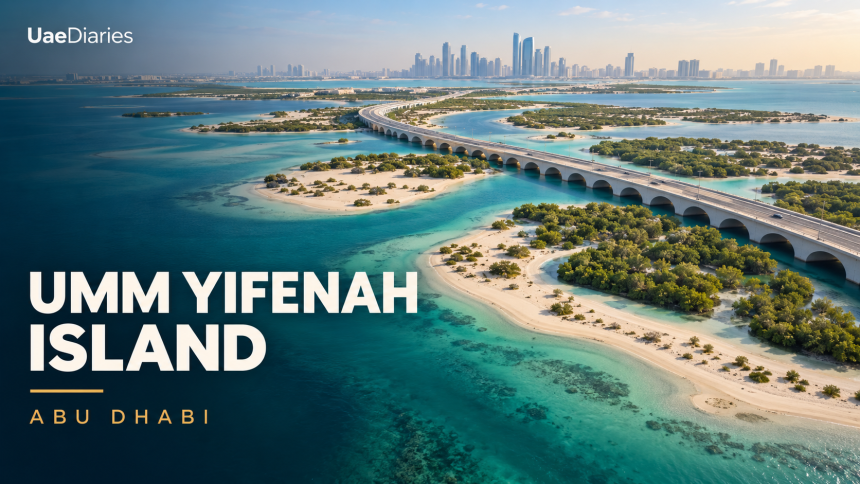
Umm Yifenah Island is a natural island in Abu Dhabi, United Arab Emirates. It sits between Al Reem Island and the Abu Dhabi mainland, close to Sheikh Zayed bin Sultan Street. The island is best known today as the site of the Umm Yifeenah Bridge, a major new road link that connects Al Reem Island to the mainland. This guide explains where the island is, why the bridge matters, what the natural surroundings look like, and what visitors and residents should know about the area.
Where Is Umm Yifenah Island Located?
Umm Yifenah Island sits on the north-eastern coast of Abu Dhabi’s main island. It lies between two busy places: Al Reem Island on one side and Sheikh Zayed bin Sultan Street (also called the E10) on the other. This spot puts the island in the middle of some of Abu Dhabi’s fastest-growing neighborhoods.
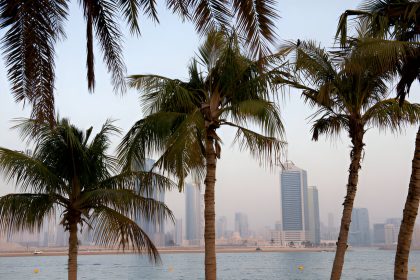
The area around the island has shallow water, tidal flats, and mangrove trees. This type of coastline is common across the small and mid-sized islands near Abu Dhabi city. Because of its location, Umm Yifenah Island plays a bigger role in transport and city planning than in beach tourism.
The Umm Yifeenah Bridge: A New Superhighway
The Umm Yifeenah Bridge is the fundamental cause of the recent fame of Umm Yifenah Island. His Highness Sheikh Khaled bin Mohamed bin Zayed Al Nahyan opened the bridge on February 9, 2023. Developed by Aldar in cooperation with Abu Dhabi’s Department of Municipalities and Transport (DMT).
Here are the key facts about the bridge:
- Length: The bridge and its connecting roads stretch about 11 kilometers.
- Lanes: It has six lanes, three in each direction.
- Traffic capacity: The highway can handle around 6,000 vehicles per hour in each direction.
- Extra paths: It includes separate walking paths and cycling lanes, plus bike rental points along the route.
- Water crossings: Part of the route runs over water for roughly 3.8 kilometers, using raised, arch-shaped sections so tides can flow naturally underneath.
The bridge links Al Reem Island, Umm Yifenah Island, and Sheikh Zayed bin Sultan Street into one fast route. This cuts travel time for people who live on Al Reem Island and need to reach the mainland quickly. It is also the first completed section of the larger Mid-Island Parkway project, which is planned to eventually connect Saadiyat Island, Al Raha Beach, and Khalifa City. Abu Dhabi’s government has said the full parkway network is expected to be finished by 2028.
Natural Environment: Mangroves and Coastal Life
Abu Dhabi’s mangrove coastline includes Umm Yifenah Island and its surrounding seas. Mangrove trees are common throughout several of the emirate’s 200-plus islands, growing in shallow saltwater. Why do these trees matter? A few reasons:
- They give shelter to fish, crabs, and shorebirds.
- Their roots help stop coastal erosion.
- They store carbon and support cleaner water.
When the Umm Yifeenah Bridge was built, engineers used precast concrete parts and raised, arch-shaped sections over the water. This design was chosen to protect the mangrove wetlands and keep normal tidal flow moving underneath the road. It shows how newer Abu Dhabi infrastructure projects try to balance fast city growth with care for natural habitats.
Nearby Islands and Landmarks
Umm Yifenah Island sits close to several well-known parts of Abu Dhabi. Knowing these neighbors helps put the island’s location in context:
- Al Reem Island: One of Abu Dhabi’s busiest residential and business districts, directly connected by the new bridge.
- Al Maryah Island: Abu Dhabi’s central financial district, located nearby along the same stretch of coast.
- Saadiyat Island: Home to cultural sites such as the Louvre Abu Dhabi, and a future link point in the wider Mid-Island Parkway plan.
- Marsa Al Saadiyat: A newer large-scale development project announced for the Saadiyat area, which is planned to connect through new roads and tunnels to both Umm Yifeenah Island and Reem Island.
Together, these islands form a chain of connected districts along Abu Dhabi’s coastline, and Umm Yifeenah Island now acts as a link in that chain rather than a stand-alone destination.
Read Also: Love Lake Dubai
Historical Background
Long before modern bridges and roadways appeared, the seas of Abu Dhabi’s coastline islands were linked to the region’s pearl diving sector. These shallows, bordered by mangroves, were home to local fishermen and pearl divers before oil and cultured pearls transformed the local economy. There are no major historic sites open to the public today on Umm Yifenah Island. However, the larger region is a reminder of Abu Dhabi’s growth from modest fishing towns to a modern capital city, while the coastline and mangroves still link back to that former way of life.
Read Also: Crescent Moon Lake
How to Reach Umm Yifenah Island Abu Dhabi
The easiest way to reach the area is by road, using the Umm Yifeenah Bridge from either Al Reem Island or Sheikh Zayed bin Sultan Street. The route has:
- Six traffic lanes for cars and vehicles
- A separate footpath for walking
- A dedicated cycling lane
- Bike rental stations along the way
Because the island is mainly an infrastructure and transit point rather than a set-up tourist beach, most visitors will experience it while driving, walking, or cycling across the bridge rather than stopping directly on the island itself.
Read Also: Al Aryam Island
Future Development Plans
Abu Dhabi’s government and developer Aldar have described the Umm Yifeenah Bridge as the first phase of the larger Mid-Island Parkway project. The full plan aims to link:
- Al Reem Island
- Umm Yifeenah Island
- Saadiyat Island
- Al Raha Beach
- Khalifa City
The network is due to be completed by 2028. Separately, the newly announced Marsa Al Saadiyat development will be connected to Umm Yifenah Island and Reem Island via new roads and tunnels and an underground Etihad Rail station. The projects are evidence of sustained growth in the area, with a continued emphasis on keeping new construction within mangrove zones as low-impact as feasible.
Read Also: Aura SkyPool Dubai
Conclusion
Umm Yifenah Island Abu Dhabi may not be a beach resort or a tourist attraction, but it has a vital role to play in the growth story of Abu Dhabi. It is situated at the juncture where nature meets infrastructure, where mangrove wetlands and the new Umm Yifeenah Bridge share the same space. This 11-kilometer road now connects Al Reem Island to the mainland in minutes, reducing travel time for thousands of daily commuters while safeguarding the tidal flats and mangroves below it.
As the Mid-Island Parkway project is due to be completed in 2028 and new developments such as Marsa Al Saadiyat are emerging, Umm Yifenah Island Abu Dhabi will be an even more important aspect of how people will get around Abu Dhabi. For now, it’s a prime example of how the city is trying to grow while keeping its natural shoreline.